
Termite Swarmers in Southern California: What They Mean and When to Be Concerned
Termite swarmers may be the most common sign of termite activity noticed by homeowners throughout Southern California. Every year, thousands of residents discover winged insects around windows, doors, patios, garages, and attic spaces and wonder whether they have a termite problem.
In many cases, those insects are termite swarmers.
While seeing swarmers does not always mean a home has an active infestation, it should not be ignored. Swarming termites are a sign that a mature termite colony exists somewhere nearby and that new colonies may be forming.
What Are Termite Swarmers?
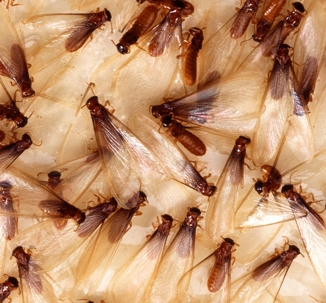
Termite swarmers, sometimes called alates, are the reproductive members of a termite colony. Their purpose is to leave an established colony, find a mate, and create a new colony in another location.
Once swarmers emerge, they fly toward light sources, pair off, shed their wings, and begin searching for suitable areas to establish new termite colonies.
Because swarmers only appear when a colony has matured, their presence often indicates termite activity that has been occurring for years before becoming noticeable.
Why Do Termites Swarm?
Swarming is a natural part of the termite life cycle.
A termite colony continually grows as workers gather food and expand the nest. Eventually, the colony produces reproductive termites capable of starting new colonies.
When environmental conditions are favorable, these winged termites leave the colony in large numbers.
Factors that commonly trigger swarming include:
- Warm temperatures
- Increased humidity
- Seasonal weather changes
- Recent rainfall
- Calm wind conditions
Many homeowners first notice swarming activity during spring and early summer, although swarming can occur at various times depending on the termite species.
What Do Termite Swarmers Look Like?
Common characteristics include:
- Four wings of equal length
- Straight antennae
- Thick, uniform waist
- Dark brown, black, or tan coloring
- Wings extending well beyond the body
After landing, swarmers quickly shed their wings. In many cases, homeowners never see the insects themselves but instead find small piles of discarded wings around windowsills, sliding doors, garage floors, or attic vents.
Termite Swarmers vs. Flying Ants
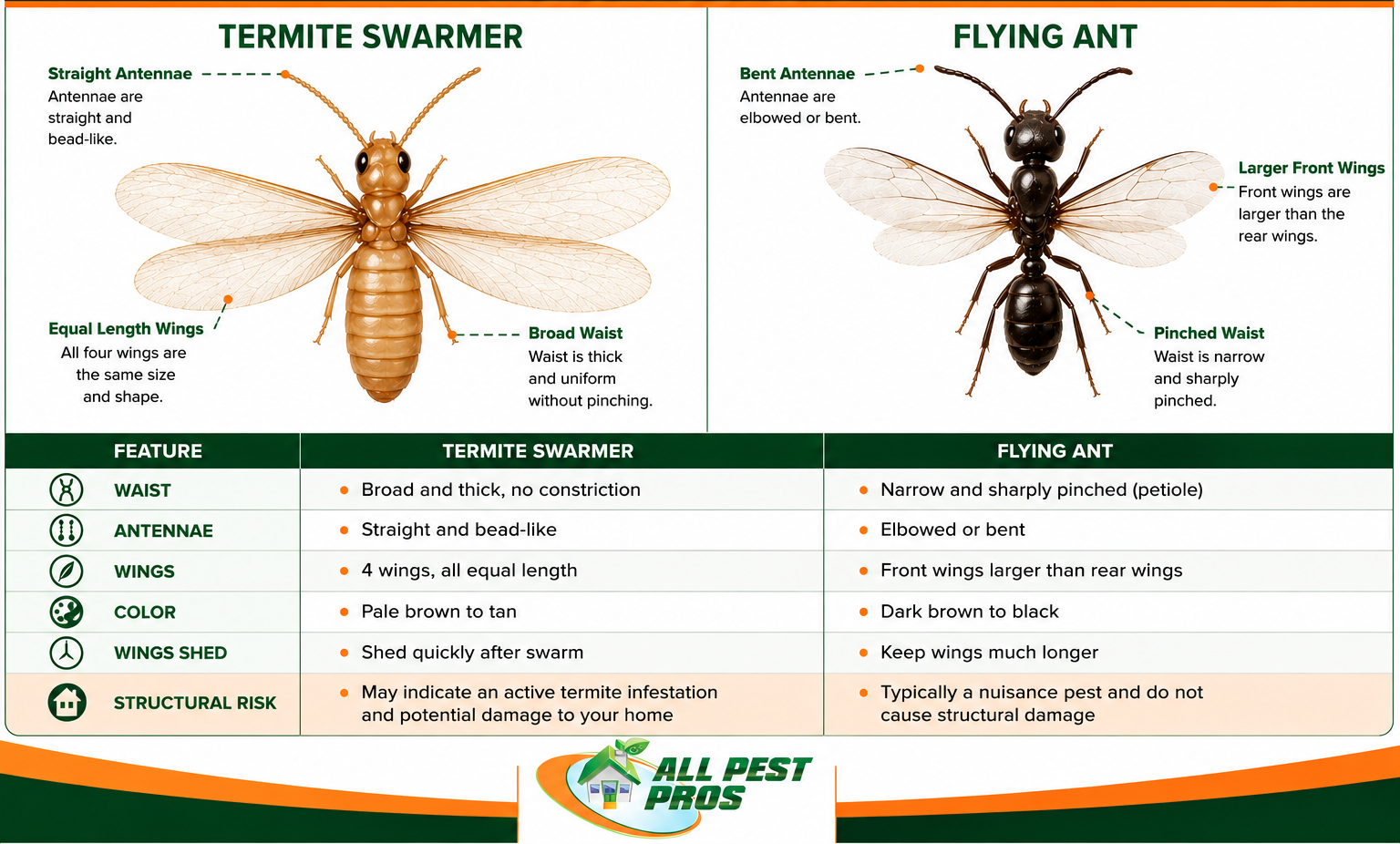
One of the most common questions homeowners ask after spotting winged insects around the home is whether they are seeing termite swarmers or flying ants.
At first glance, the two insects can look very similar. Both have wings, both may appear in large numbers, and both are commonly attracted to windows and light sources. However, there are several key differences that make identification easier.
How to Tell the Difference
Termite Swarmers
- Straight, bead-like antennae
- Thick, uniform waist
- Four wings of equal length
- Wings extend well beyond the body
Flying Ants
- Elbowed (bent) antennae
- Narrow, pinched waist
- Front wings larger than rear wings
- More segmented body appearance
For most homeowners, the easiest feature to identify is the waist. Termite swarmers have a broad body with no noticeable narrowing between the thorax and abdomen, while flying ants have the distinct pinched waist commonly associated with ants.
The wings are another reliable indicator. Termite swarmers have four wings that are nearly identical in size, while flying ants have larger front wings and smaller rear wings.
Why Proper Identification Matters
Flying ants can certainly become a nuisance, but they do not consume wood or cause structural damage. Termite swarmers, on the other hand, indicate that a mature termite colony exists nearby and may signal an active infestation within the structure.
If winged insects are discovered inside the home and identification is uncertain, a professional termite inspection can quickly determine whether termites are present and whether treatment is necessary.
Many homeowners are relieved to learn they are dealing with flying ants rather than termites. However, because the two insects are so frequently confused, it is always better to verify than assume.
Does Seeing Swarmers Mean There Are Termites in the House?
Swarmers can originate from a colony located inside the structure, beneath the structure, or even from neighboring properties.
However, swarmers should always be taken seriously because they indicate termite activity somewhere nearby.
If swarmers are found indoors, there is a greater likelihood that termites are active within the structure itself.
A professional termite inspection can determine whether the swarmers originated from an active infestation or entered from outside.
Drywood Termite Swarmers
Drywood termites are one of the most common termite species found in Southern California homes.
Unlike subterranean termites, drywood termites do not require contact with soil. Colonies live directly inside wooden structural components.
Common locations include:
- Attic framing
- Fascia boards
- Roof sheathing
- Eaves
- Window frames
- Door frames
- Exposed wood trim
Because colonies live inside the wood itself, drywood termite swarmers may emerge directly from walls, ceilings, attics, or exterior wood members.
Many homeowners first discover a drywood termite infestation after noticing swarmers near windows or finding small piles of termite droppings.
Subterranean Termite Swarmers
Subterranean termites are the other major termite species affecting Southern California properties.
These termites build colonies in the soil and travel into structures through mud tubes.
Swarmers from subterranean colonies often emerge from:
- Foundation areas
- Crawlspaces
- Expansion joints
- Landscaping adjacent to the home
- Soil near the structure
Because subterranean termite colonies can contain hundreds of thousands of termites, swarming activity can appear much heavier than what is typically seen with drywood termites.
Common Places Homeowners Find Swarmers
Termite swarmers are attracted to light and are frequently discovered near:
- Windows
- Sliding glass doors
- Entry doors
- Garage doors
- Skylights
- Light fixtures
- Attic vents
Even a small number of swarmers indoors warrants further investigation.
Other Signs of Termite Activity
Swarmers are only one indication of termite activity.
Additional warning signs may include:
- Discarded wings
- Mud tubes along foundations
- Hollow sounding wood
- Bubbling paint
- Wood damage
- Tight-fitting doors or windows
- Small piles of termite droppings
Many infestations remain hidden for years before visible damage becomes apparent.
What Should Homeowners Do If They See Termite Swarmers?
The first step is to correctly identify the insect. Flying ants and termite swarmers are commonly confused, and treatment recommendations differ significantly.
If termite swarmers are confirmed, a professional termite inspection should be scheduled to determine:
- Whether termites are active
- The species involved
- The extent of the infestation
- Appropriate treatment options
Depending on the findings, recommendations may include localized termite treatment, soil treatment for subterranean termites, or whole-structure fumigation for drywood termite infestations.
Termite swarmers are often the first visible indication that termites are active near a home. While seeing swarmers does not automatically mean severe damage is present, it does mean termites are established somewhere in the area.
Early identification and treatment can help prevent extensive damage and reduce repair costs. If swarmers, discarded wings, or other signs of termite activity are discovered, a professional termite inspection is the best way to determine whether termites are present and what treatment options are available.